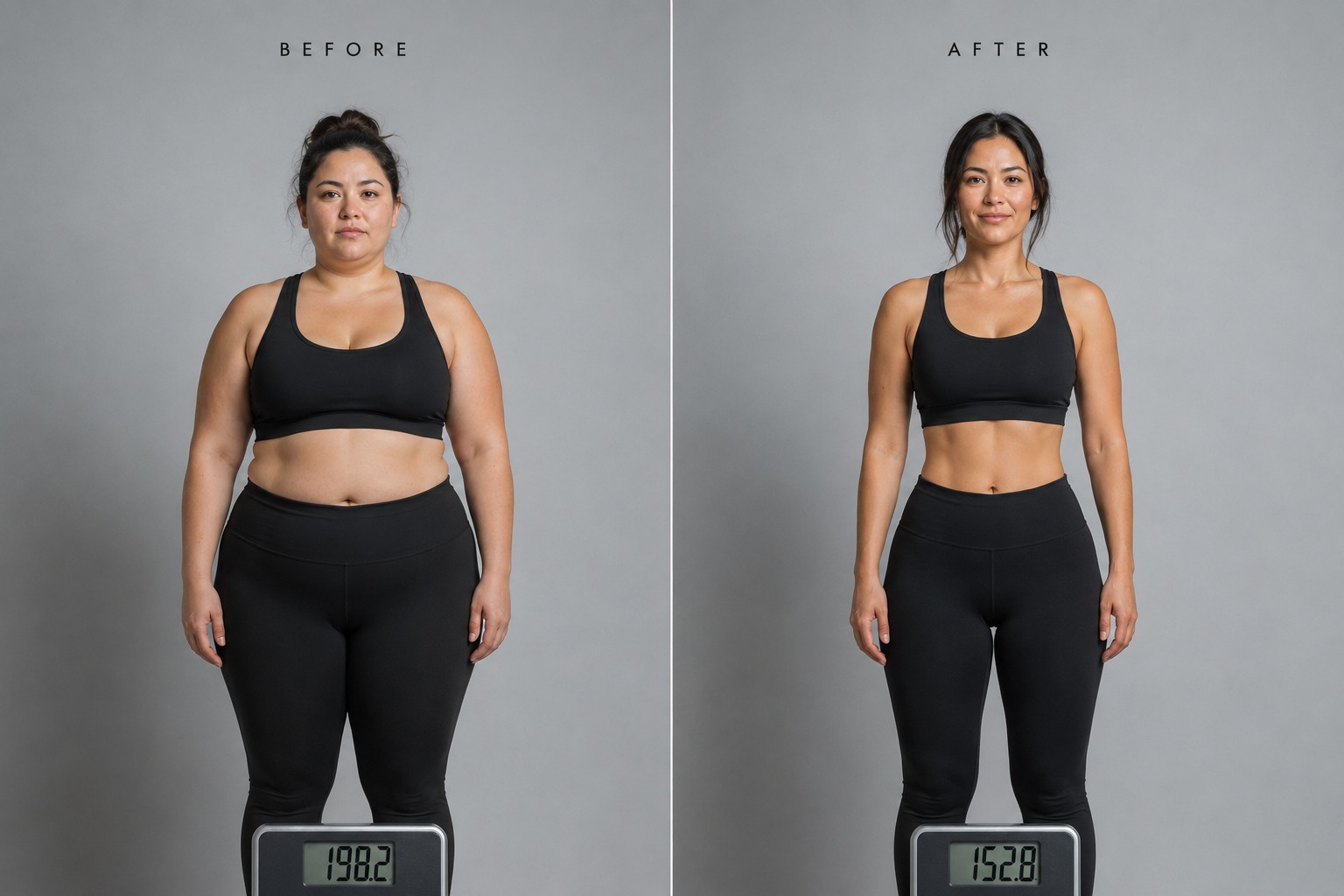
What 20% actually means
For a 230-pound man, 20% is a loss of 46 pounds, putting him at 184. For a 175-pound woman, it’s 35 pounds, taking her to 140. This is the magnitude that GLP-1 trials of the FDA-approved branded products have repeatedly produced: the SURMOUNT-1 trial of FDA-approved branded tirzepatide (Zepbound® 15 mg) showed an average 20.9% body-weight reduction at 72 weeks. STEP-1 with FDA-approved branded semaglutide (Wegovy® 2.4 mg) showed 14.9% at 68 weeks. Compounded preparations of either molecule are not FDA-approved or evaluated by FDA. Individual results vary.
The reason this number matters is biological. Roughly 15-20% weight loss is the threshold at which fat mass drops enough to meaningfully change insulin resistance, blood pressure, lipid profiles, and inflammatory markers. Below that, you get cosmetic improvement. At and above that, you change disease trajectories.
What it does to your mortality risk
The 2024 SELECT trial, 17,604 patients with cardiovascular disease followed for over three years on semaglutide, produced the cleanest evidence yet:
- 20% reduction in major cardiovascular events (heart attack, stroke, cardiovascular death)
- 19% reduction in all-cause mortality
- Effects independent of starting weight or diabetes status
For context: this is in the same range as statin therapy (the most-prescribed drug class on Earth) and exceeds the mortality benefit of most blood pressure medications. The patients in SELECT lost an average of ~9.4% of body weight, not 20%. Larger losses produce larger benefits.
Diabetes risk drops off a cliff
Insulin resistance is largely a fat-storage problem. As visceral fat decreases, the liver and pancreas resensitize. Studies of bariatric surgery and GLP-1 therapy have consistently shown:
- 60-70% reduction in progression from prediabetes to diabetes
- 30-50% remission rates in established type 2 diabetes
- 1.5-2.0% drop in HbA1c with sustained 15%+ weight loss
If you have a family history of diabetes and you're carrying 30+ pounds of excess weight, dropping 20% of body weight is the single most diabetes-protective thing you can do. More than diet quality. More than exercise. More than any supplement.
What changes in your body that you can feel
The mortality numbers are abstract. The day-to-day effects are not:
- Joint pain: every pound of weight removes ~4 pounds of force from each knee step. 40 lbs lost = 160 lbs less force per knee per step. Knee pain often resolves entirely.
- Sleep apnea: mild-moderate sleep apnea resolves in 50-70% of patients with 15%+ weight loss. Better sleep cascades into better testosterone, mood, recovery, and cognition.
- Libido and erectile function: visceral fat raises aromatase activity, which converts testosterone to estrogen. Losing visceral fat raises free testosterone and improves sexual function in 60-70% of overweight men.
- Energy and stamina: resting heart rate typically drops 10-15 bpm. Walking 30 minutes goes from exhausting to easy.
- Fertility: in women with PCOS, 10-15% weight loss restores ovulation in over 50%.
What changes in your bloodwork
Most lab markers move dramatically with 15-20% weight loss:
- Triglycerides: down 30-50%
- HDL: up 10-15%
- ApoB: down 15-25%
- hs-CRP (inflammation): down 30-50%
- Fasting insulin: often down 40-60%
- Liver enzymes (ALT/AST): often normalize from elevated
- Blood pressure: down 5-10 mmHg systolic
This is why running labs before, during, and after weight loss is so valuable: you see the disease risk recede in real time. A comprehensive panel at month 0, month 6, and month 12 turns weight loss into measurable medicine.
The catch: muscle preservation matters
20% body weight loss is only beneficial if most of it is fat. Aggressive caloric restriction without resistance training results in 25-30% of weight loss coming from muscle, which permanently lowers metabolism and increases risk of regain. The protocols that produce the best long-term results combine GLP-1 medication with:
- 1.0-1.2 g protein per pound of goal body weight, daily
- Resistance training 3-4 days per week
- Adequate creatine, vitamin D, and magnesium
- Hormone optimization where indicated (low T, perimenopause, etc.)
This combination produces 80-90% fat loss with minimal muscle loss, exactly what you want.
The bottom line
20% body weight loss has moved from "nice to have" to "single most powerful preventive intervention available" in the span of three years. The SELECT and SURMOUNT data have made it the new standard against which other interventions are measured. For people with 30+ excess pounds and a strong family history of metabolic or cardiovascular disease, getting to that threshold is medicine, and modern protocols with GLP-1s, lab-monitored physician oversight, and proper training make it achievable for the first time.