Key takeaways
- Most plateaus break with dose adjustment, protein increase, training intensification, or addressing an unrelated hormonal issue.
- As you lose weight there is less of you to carry, so resting energy expenditure falls; appetite signalling increases in response to the deficit; and non-exercise movement quietly declines.
- A large number of people are sitting at an early titration dose without realising it.
- Six months in, most people have adapted somewhat, portions creep, snacks return, and liquid calories reappear.
- Every deficit costs some lean tissue unless you actively defend it.
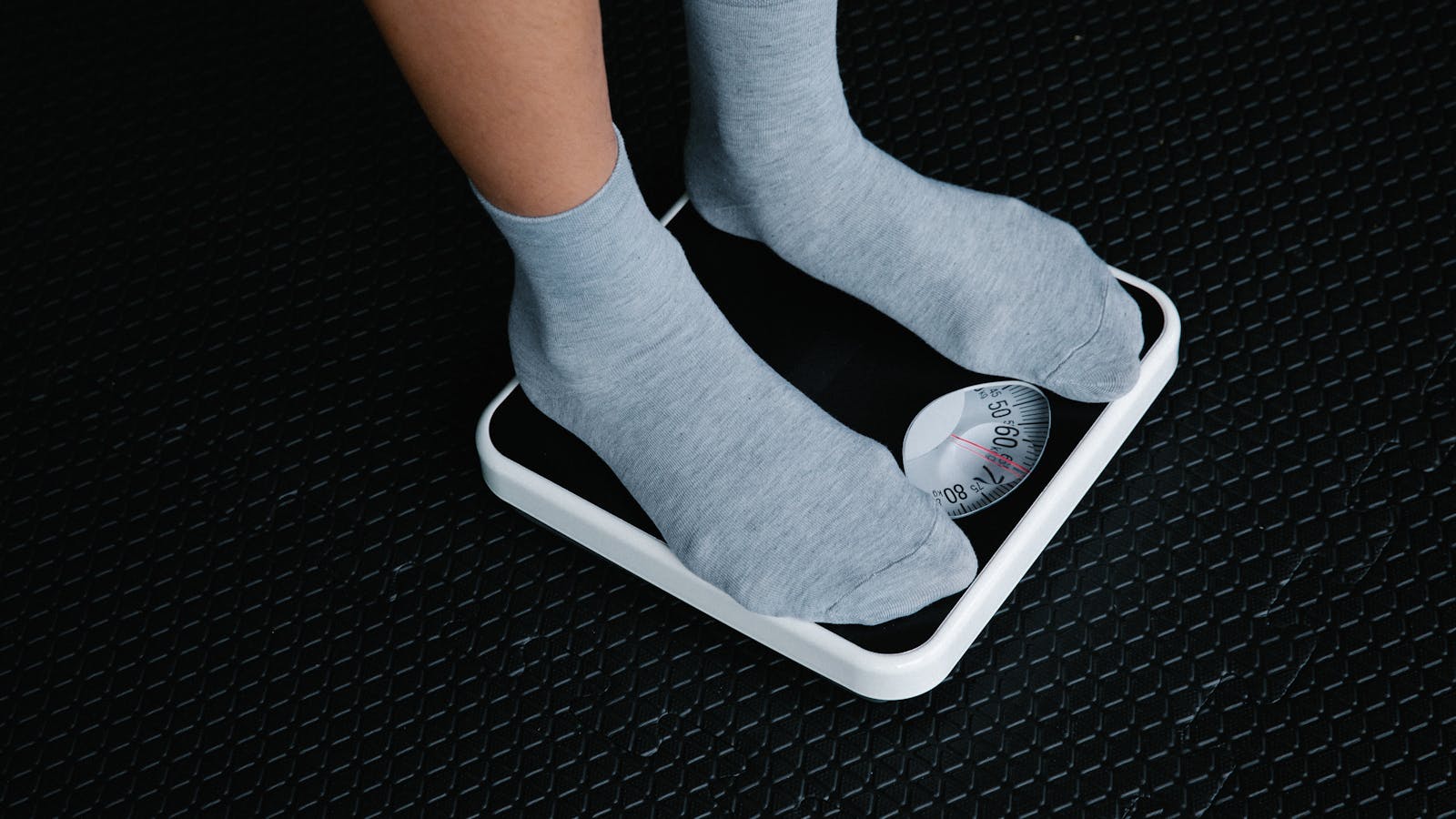
The scale stops moving for three weeks and the conclusion arrives immediately: it stopped working. Almost always, it did not. A plateau is a signal, and it is usually pointing at something specific and fixable — dose, intake drift, lean mass, sleep, or a hormonal headwind nobody has measured yet. The work is figuring out which one, in order, instead of guessing.
First: some plateaus are supposed to happen
Weight loss is not linear and was never going to be. As you lose weight there is less of you to carry, so resting energy expenditure falls; appetite signalling increases in response to the deficit; and non-exercise movement quietly declines. The deficit you set three months ago is smaller today even though nothing about your behaviour changed (Leibel et al., N Engl J Med 1995). Progress slows.
On top of that, the overall trajectory of GLP-1 therapy tends to flatten as the body settles at a new equilibrium, generally somewhere in the region of a year to fifteen months in. If you are fourteen months in, near a reasonable weight, and holding steady, you are not stalled. You have arrived, and the job changes from losing to maintaining.
The plateaus worth investigating are the other kind: the one that shows up at month four, or month six, well short of where you and your physician expected to be. There is normally a reason, and it is normally one of the following six.
1. The dose is lower than you think
A large number of people are sitting at an early titration dose without realising it. The pattern is familiar: nausea during an escalation, a decision to hold, and then months pass at a dose that was only ever meant to be a stepping stone. Escalation is not automatic — somebody has to decide to do it.
Maintenance dosing for semaglutide sits well above the starting steps, and the right target for you is a clinical decision, not a default. One practical advantage of a compounded protocol is that a physician can prescribe intermediate doses rather than being limited to the fixed steps of a pen — which matters a lot for someone who cannot tolerate a full jump but does fine with half of one.
Before you conclude that the medication has stopped working, confirm what dose you are actually on, how long you have been there, and whether your prescriber intended it to be your endpoint.
2. Intake has drifted
This is the most common cause and the least popular explanation. Appetite suppression is strongest early. Six months in, most people have adapted somewhat, portions creep, snacks return, and liquid calories reappear (Sumithran et al., N Engl J Med 2011). Two or three hundred extra calories a day is invisible day to day and completely sufficient to erase a deficit.
The fix is not a stricter diet. It is seven to fourteen days of honest tracking — everything, weighed where practical, including the bites while cooking. Most people are genuinely surprised, and most find the answer inside two weeks. If tracking shows you are where you thought you were, you have ruled out the biggest cause and can move down the list with confidence.
3. Lean mass, and the metabolic cost of losing it
Every deficit costs some lean tissue unless you actively defend it. Lean tissue is metabolically active, so losing a meaningful amount of it lowers your resting metabolic rate beyond what your smaller body size explains — and you have made maintenance permanently harder in exchange for a faster number on the scale.
Two defences, both non-negotiable. Protein at roughly 1.0–1.2 g per pound of goal weight (see how much protein you actually need), which is difficult on a suppressed appetite and needs deliberate planning rather than good intentions. And resistance training three to four days a week, which is the actual stimulus telling your body to keep the tissue (Longland et al., Am J Clin Nutr 2016). Without both, plateaus are not a surprise; they are built in.
4. Sleep
Short sleep measurably reduces insulin sensitivity within days, raises cortisol, increases appetite-driving signalling, and shifts the composition of what you lose in an unfavourable direction (Nedeltcheva et al., Ann Intern Med 2010). See sleep, cortisol and recovery.
This one is worth checking early because it is common and invisible. If your plateau started during a stressful quarter at work, a new baby, or a run of six-hour nights, the medication is not the variable that changed. Fixing sleep is unglamorous and frequently restarts progress on its own.
5. Hormonal headwinds
When someone is doing everything right and still stalled, comprehensive bloodwork often finds the answer. The usual candidates:
- Suboptimal thyroid function. Thyroid hormone is a primary regulator of metabolic rate, and a level inside the reference range is not automatically an optimal one. See the TSH range debate.
- Elevated cortisol. Chronic stress signalling is associated with visceral fat retention and with the appetite and sleep disruption that come with it.
- Perimenopausal changes in women. Shifting estrogen alters where fat is stored and how the body responds to a deficit. See GLP-1s in perimenopause.
- Low testosterone in men. Common alongside excess weight, and associated with the fatigue, poor sleep quality and low drive that make consistent training and eating far harder to sustain. Worth measuring rather than assuming.
None of these are things you can infer from the scale. They require labs, and the reason to run them at a plateau rather than at the start is that a plateau is the point at which they become the most likely remaining explanation.
6. You are moving less than you were
Non-exercise activity — walking, fidgeting, standing, general restlessness — falls during sustained weight loss, and it falls without you noticing. It is one of the body's more effective ways of closing an energy gap. Someone who was averaging nine thousand steps in month one and six thousand in month five has lost a real amount of daily expenditure while believing nothing changed. A step count is the cheapest diagnostic you own; look at the trend, not today.
The plateau-break protocol, in order
- Track honestly for 7–14 days. Rule in or out the most common cause first.
- Check your step trend against the first month of therapy.
- Confirm your dose and how long you have held it with your prescriber, and discuss whether titration is appropriate.
- Get protein to target consistently for a full month before judging the effect.
- Resistance train three to four days a week, progressively.
- Audit sleep. Protect seven hours as a floor, not a goal.
- Run labs — thyroid, fasting insulin, cortisol, plus testosterone in men and estradiol in women.
- Discuss whether a change of agent is appropriate. Tirzepatide and semaglutide do not act on identical receptor targets, and switching is a recognised clinical option — a physician's decision, based on your response and tolerability.
Work it in that order. The first two steps are free and catch most cases. The later ones cost money and time and are worth spending once the cheap explanations are eliminated.
The principle: The medication is a tool inside a system, not a substitute for one. When the tool appears to stop working, check the rest of the system before you change the tool.
Bottom line
GLP-1 plateaus almost always have an identifiable cause: a dose that was never escalated, intake that drifted, lean mass that was not protected, sleep that collapsed, movement that quietly fell away, or an unmeasured hormonal factor. Some plateaus, especially late ones near a sensible goal weight, are simply the body arriving where it was going. Work through the causes in order of cost, give each change four to eight weeks to show up, and bring the data to your physician rather than a conclusion.
Educational content, not medical advice. Compounded preparations are not FDA-approved or evaluated by the FDA for safety, effectiveness, or quality. Individual results vary. Dose changes and any change of medication are decisions for your prescribing physician after individual evaluation.